✨ INTERVIEW ON B2B UPCYCLING

REFISHED FOUNDER SISSI VOGLER-WAGNER CHATS ABOUT THE UPCYCLING BOX
***
“Waste is generated everywhere, or will be. The question is, on the one hand, how we can minimize this waste from the outset and, on the other, what useful things we can make from it.”
(Sissi Vogler-Wagner, REFISHED founder)
***
What does upcycling mean to you?
Unlike recycling, upcycling does not destroy the base material but processes it directly into a new product. What I particularly like about it is that the step of melting down or breaking down the material is eliminated. I find it exciting that you can basically upcycle endlessly: You always find material or products that can be rescued from the landfill or from single-use, to make something useful and (again) valuable out of them.
Where does your passion for upcycling come from?
Actually, from my mother Isolde, who showed us from an early age what you can create out of supposedly old things. Her creativity was limitless. An old favorite sweater was turned into a cover for a hot water bottle, and Grandma's armchair was reupholstered with an old but beautifully patterned curtain. That has always inspired and excited me.
When did you found REFISHED and what does the brand stand for?
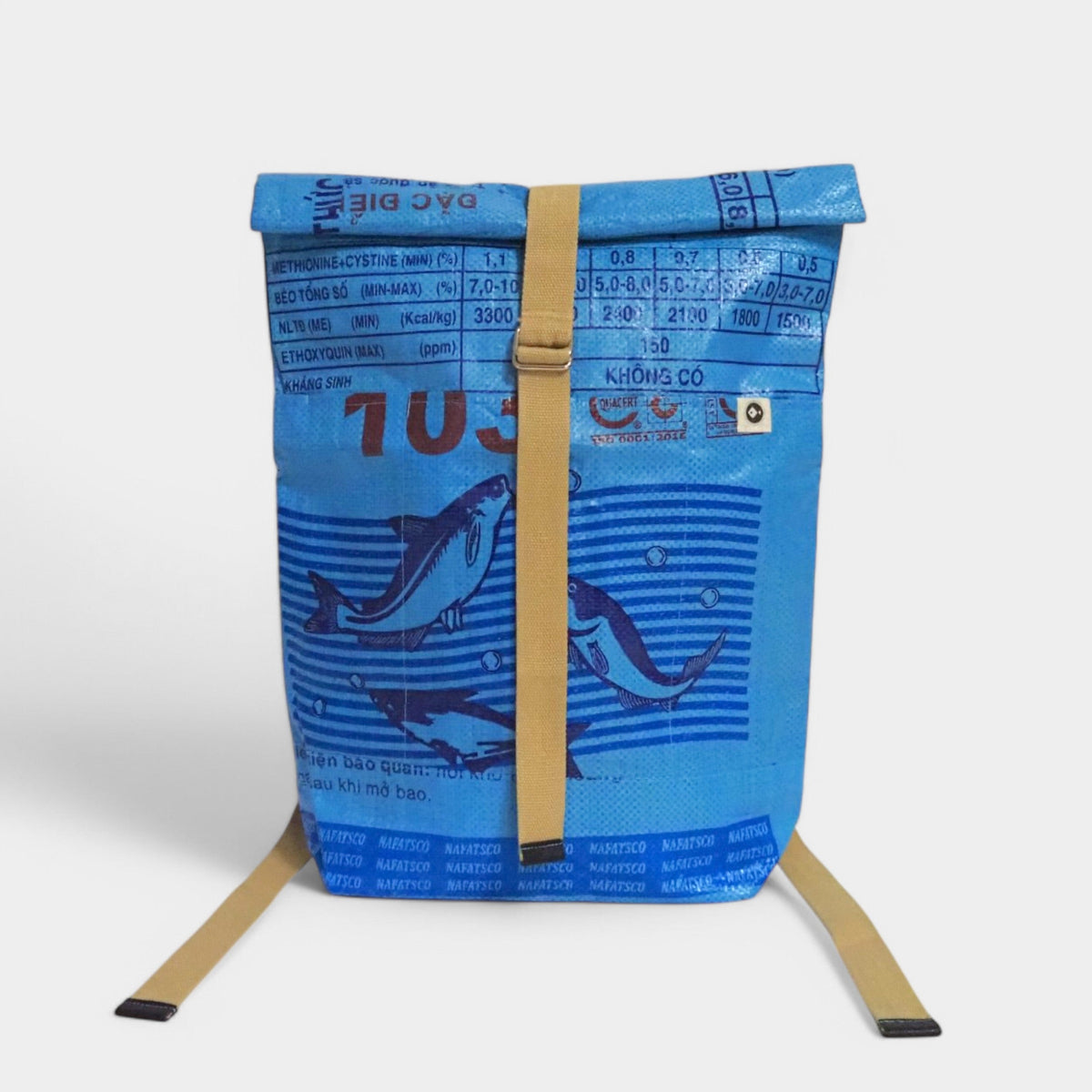
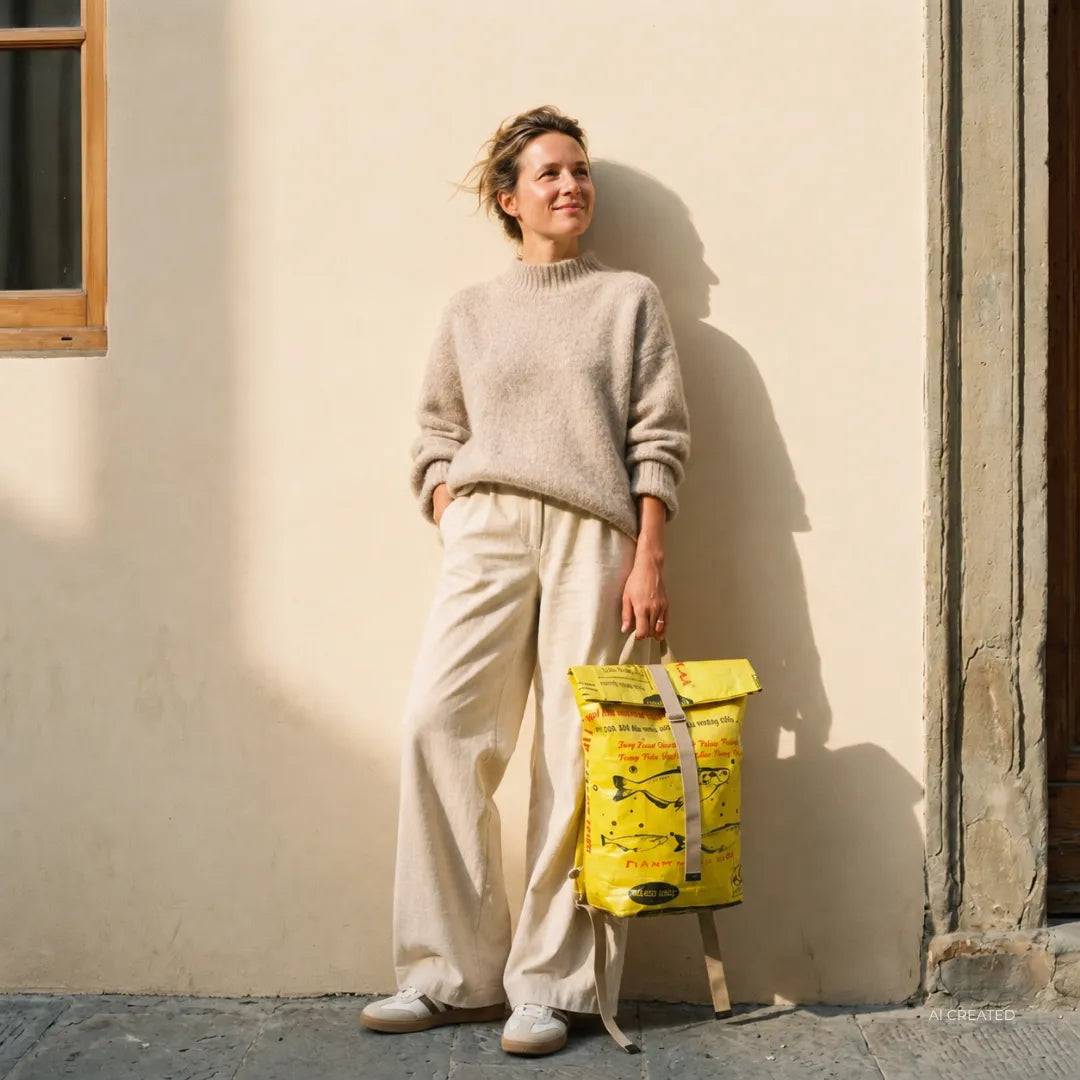
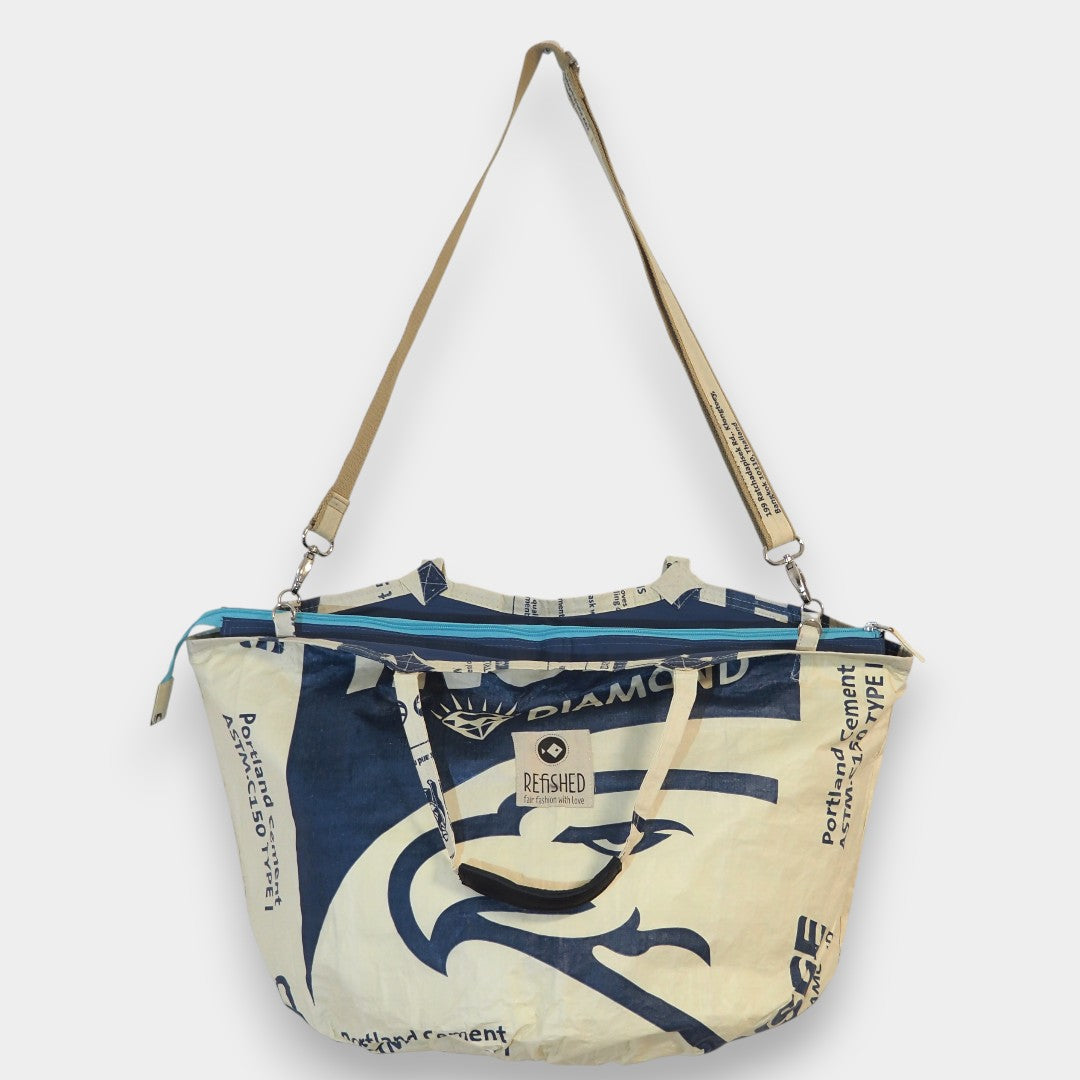
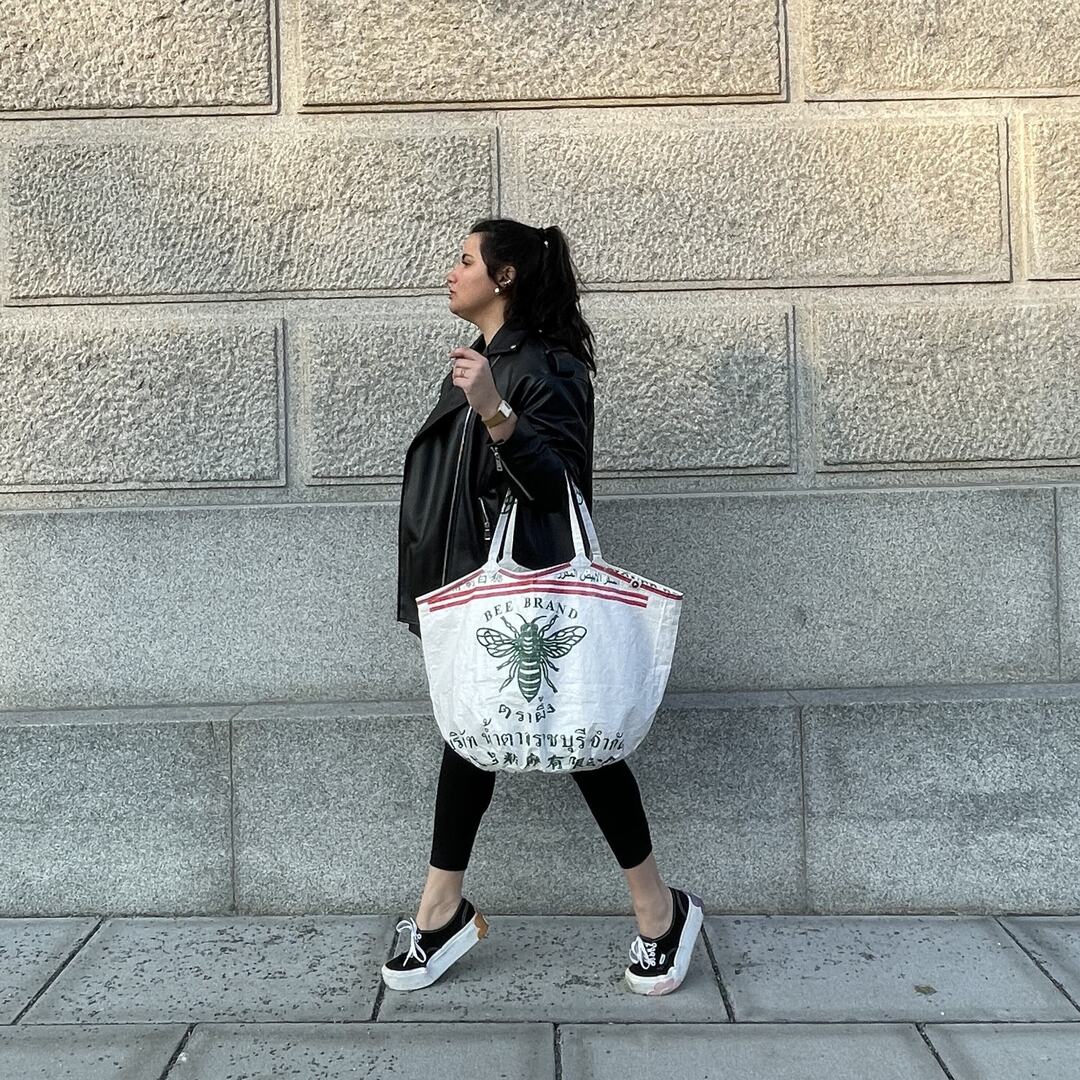
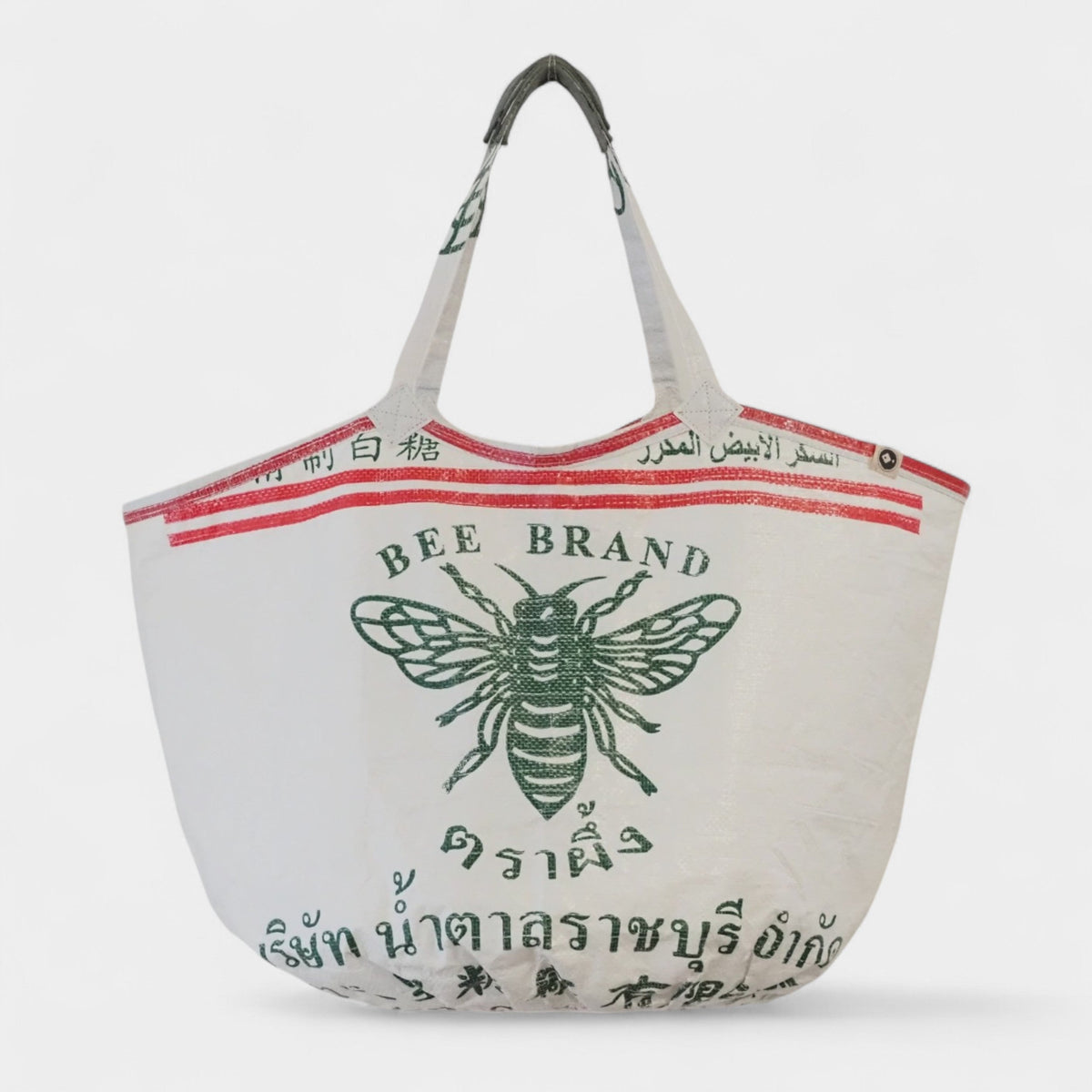
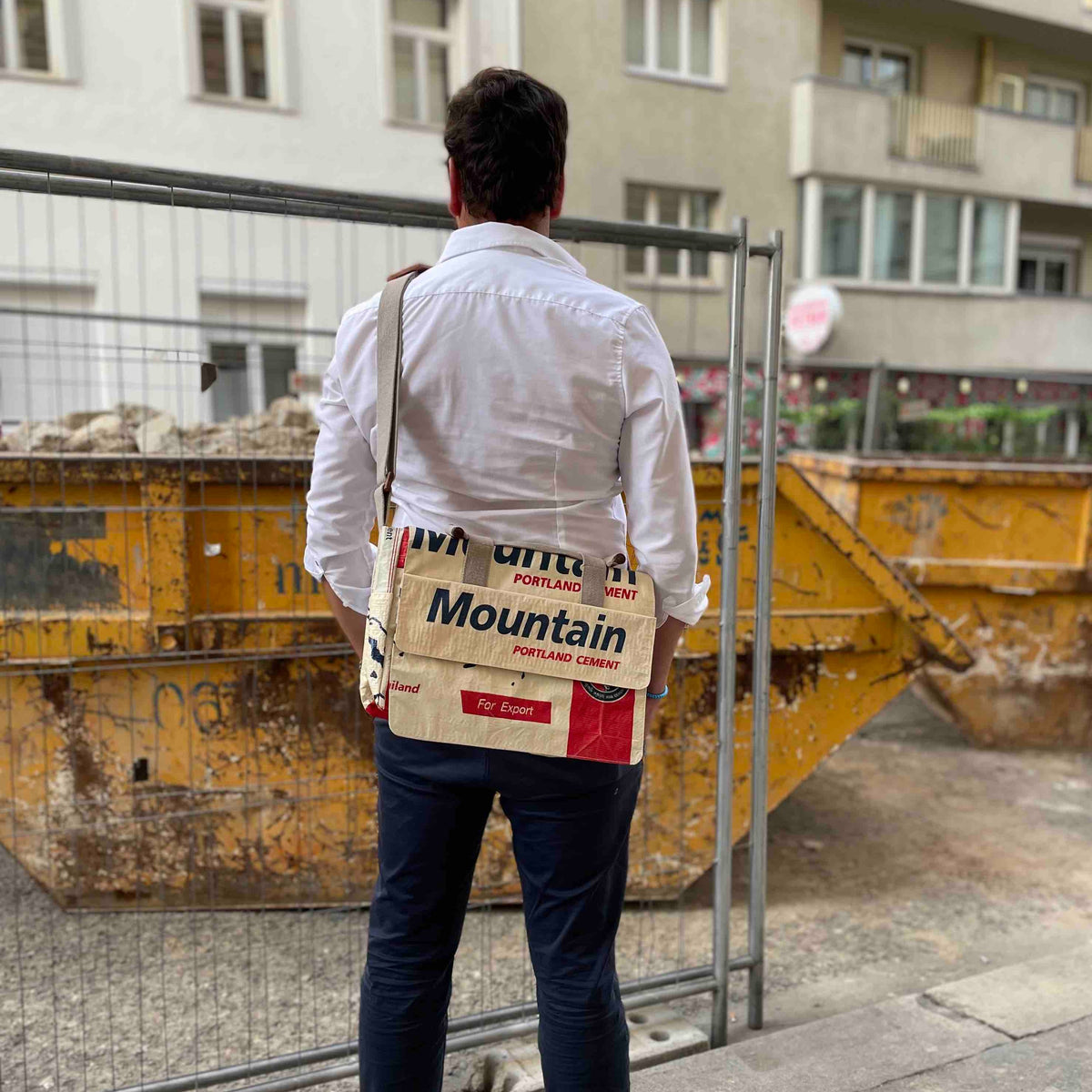
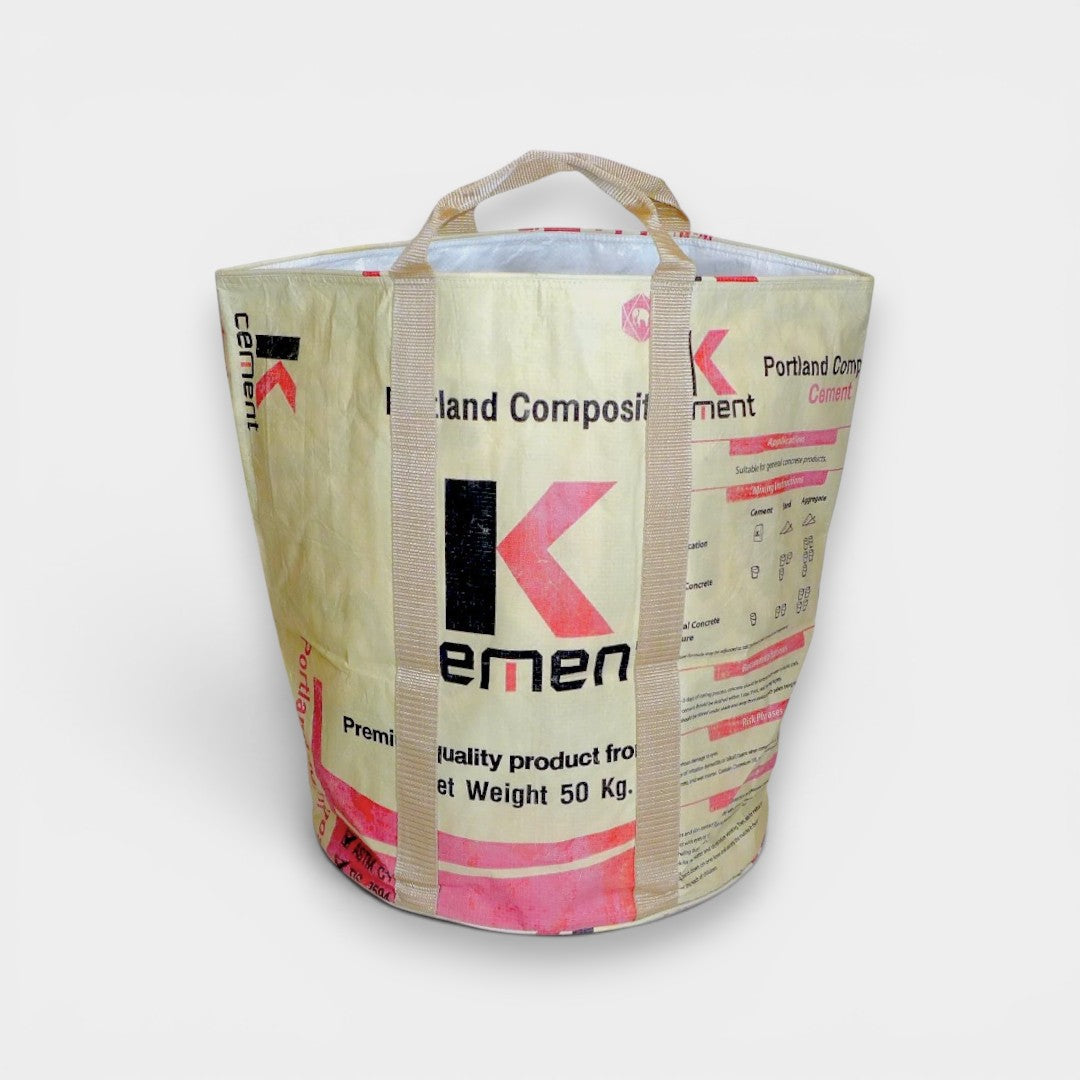
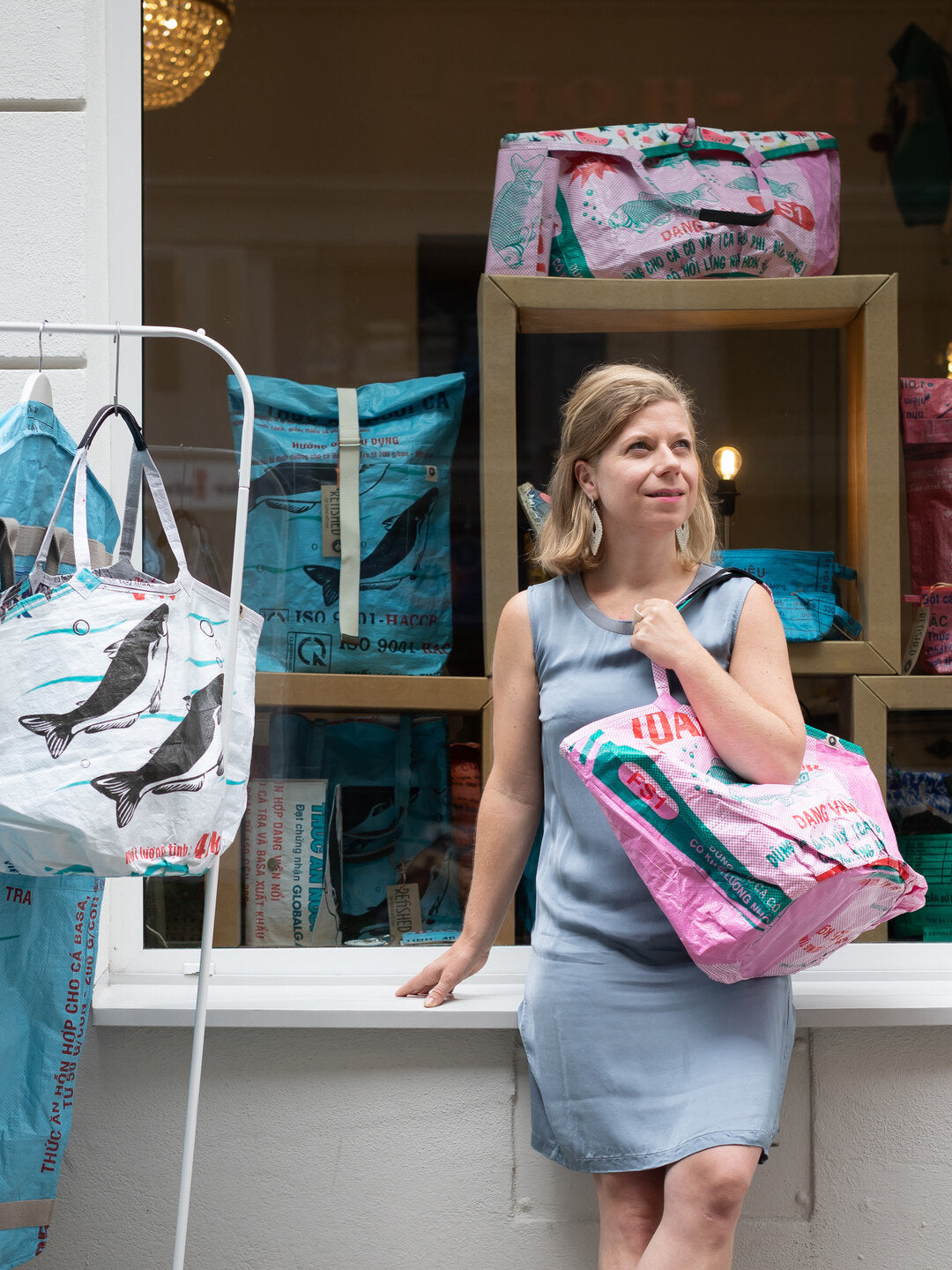
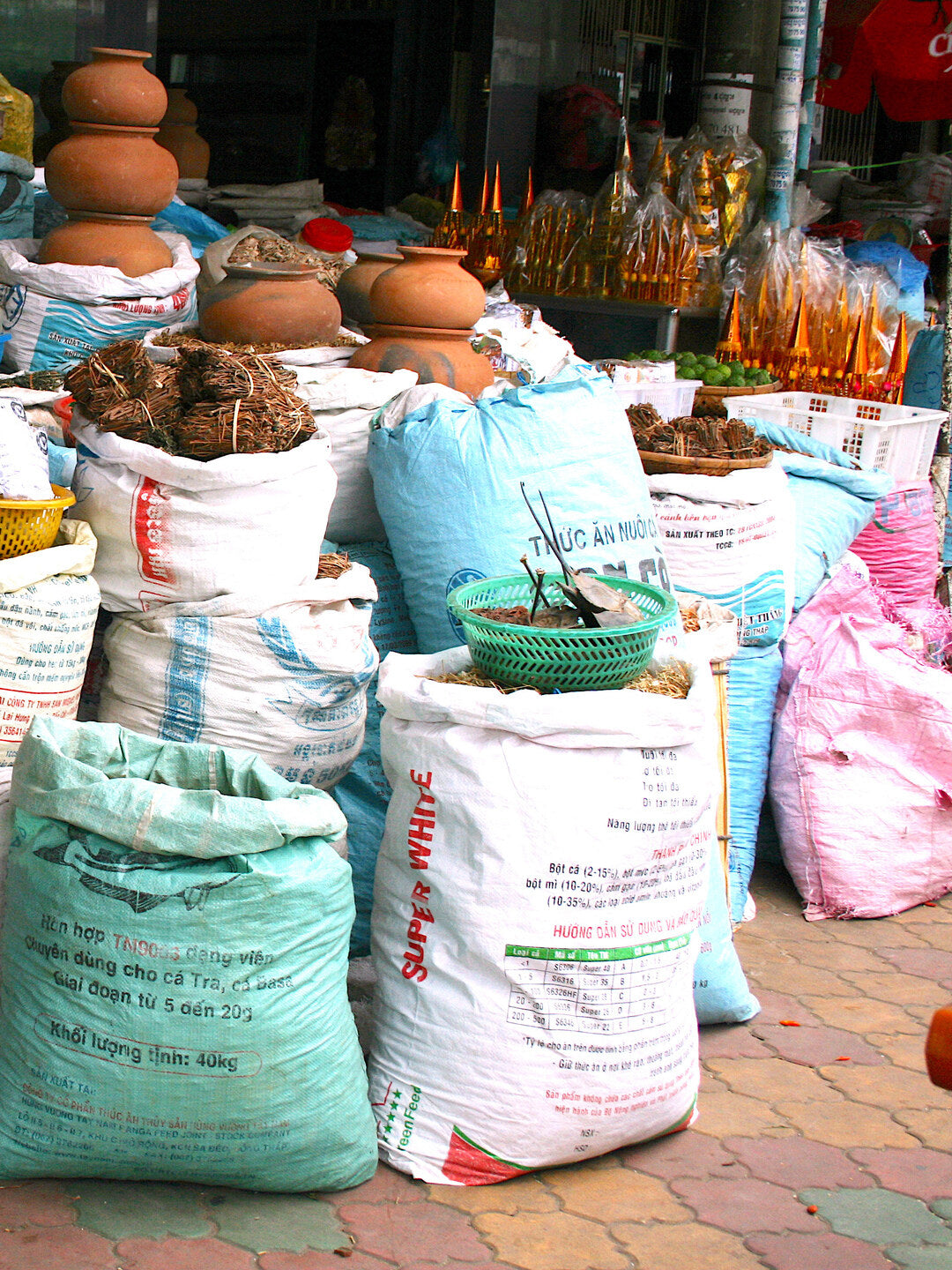
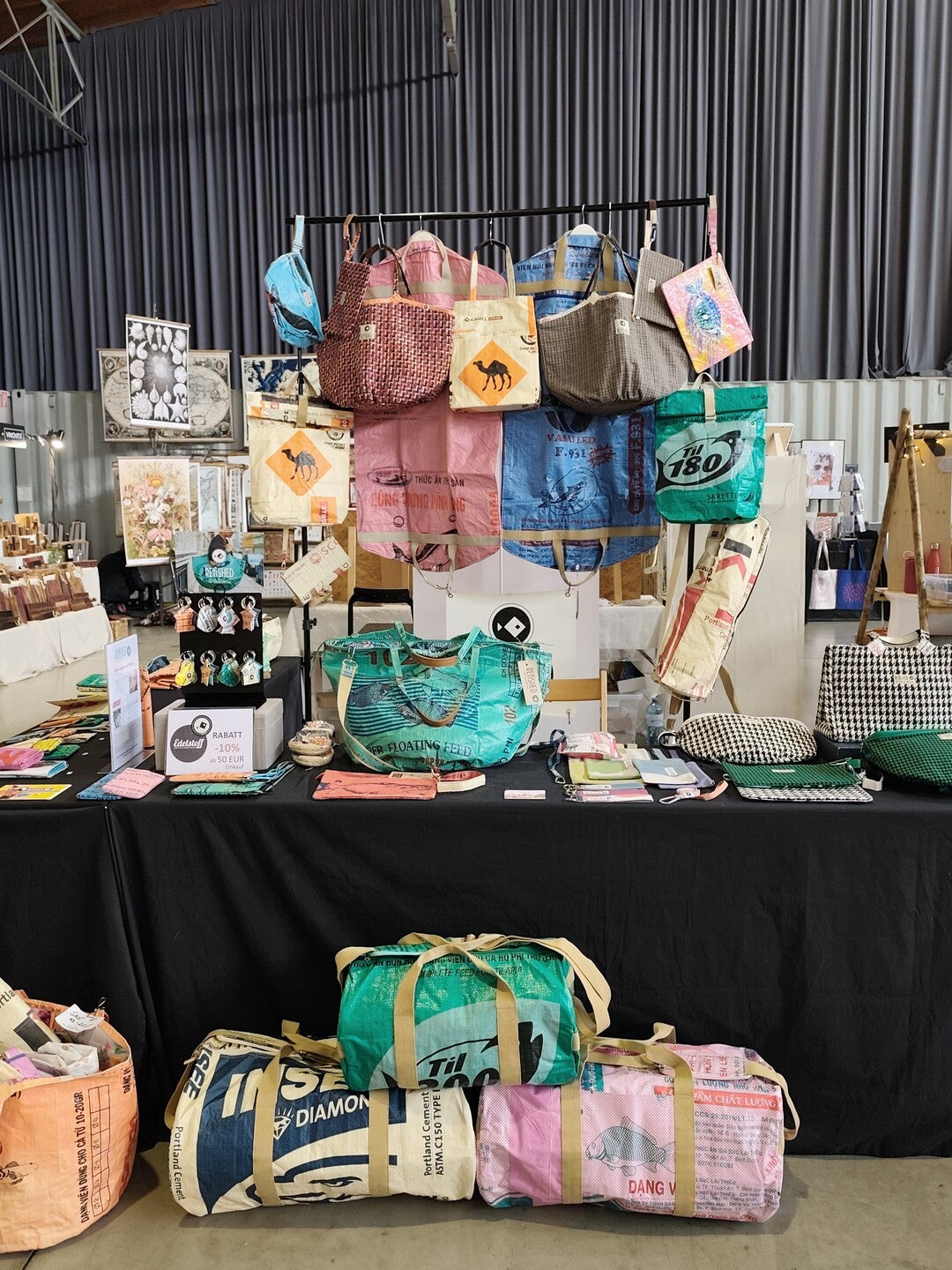
In 2012, I founded my label after discovering old fish feed and cement sacks in great colors as base material on a trip to Asia. Upcycling is central to us: We process material that would otherwise be thrown away. In addition, we provide jobs for people with disabilities at our partner Rehab Craft Cambodia. We also make it clear on the product who sewed it and where it was produced.
What were your first B2B upcycling collaborations?
The Bank Austria Kunstforum approached us in 2019 asking for ideas on how to reuse its rotating exhibition flags. They no longer wanted to simply throw them away. We love upcycling – no matter what material! So we designed our small but fine #FLAGS collection for the Kunstforum. Shortly after, the Belvedere Wien approached us with a similar request. Here too, we designed a few fine pieces from their used VIENNA PRIDE flags.
Do you want to further develop the B2B upcycling branch, and if so, why?
Developing the B2B branch is one of my goals for the next few years. We have reached a point on Earth where we need to take extremely good care of our resources. More and more, awareness of this is also growing among companies in various industries. Waste is generated everywhere, or will be. The question is, on the one hand, how we can minimize this waste from the outset and, on the other, what useful things we can make from it. A prime example of this is the Schärdinger reusable bottle campaign, in which we were able to participate as a bag manufacturer.
What was special about the Schärdinger campaign?
The reuse of the material was planned from the beginning: It was decided in advance that bags would be upcycled from the giant billboard at Westbahnhof, which could be won in a competition. I hope that many companies will be inspired by this and think about the end of a campaign from the outset!
What used materials do you already have experience with?
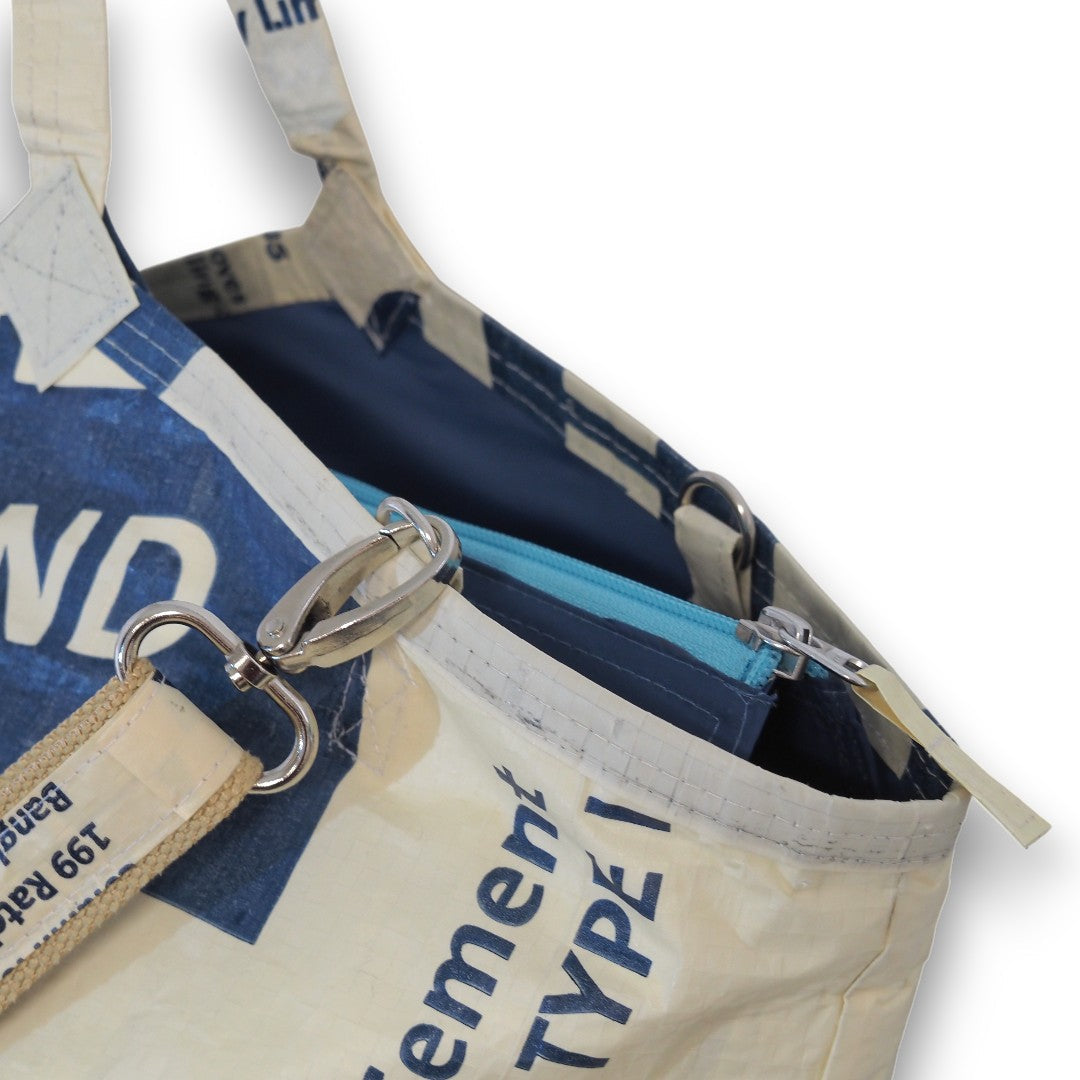
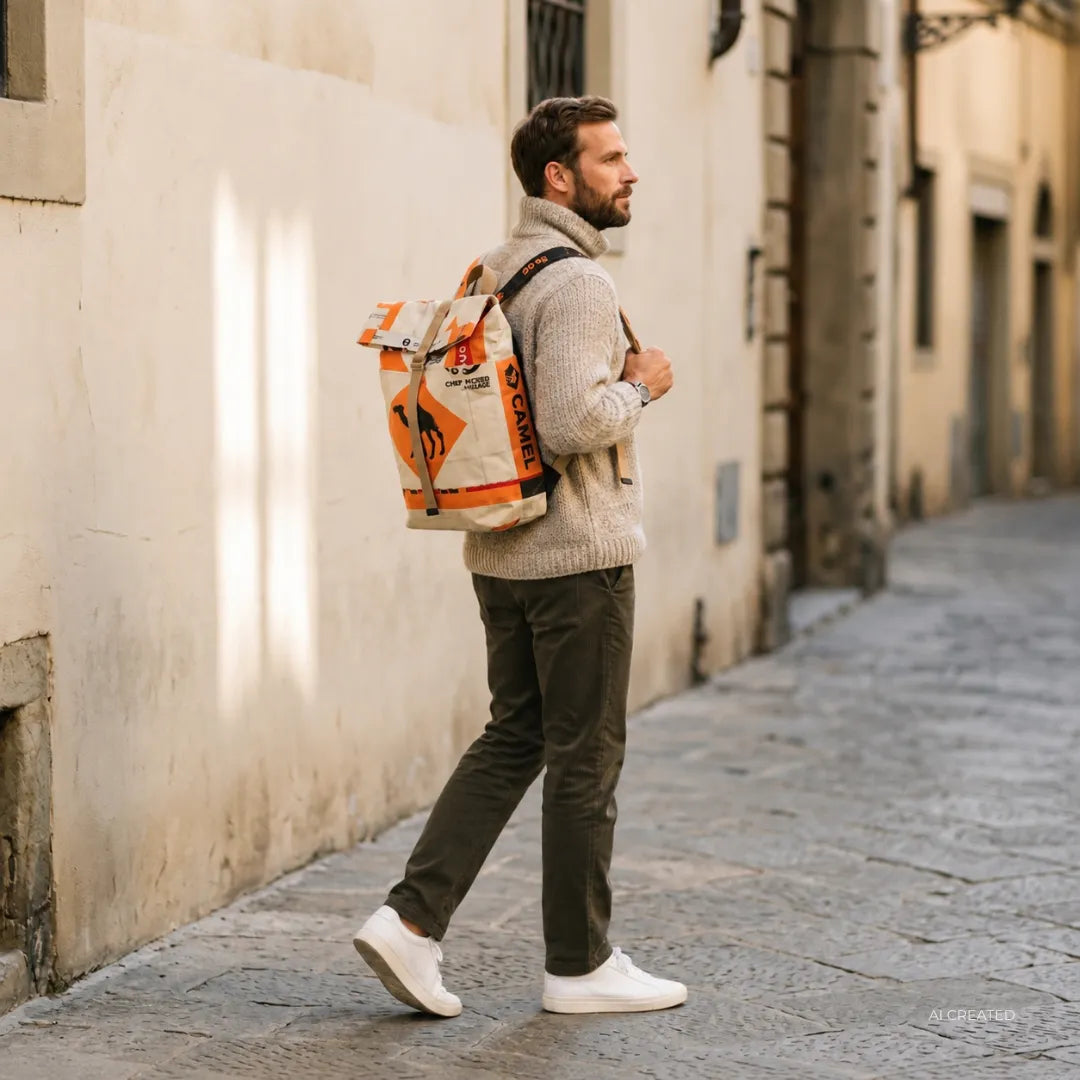
We have already processed several interesting materials into stylish bags: in addition to PP cargo sacks (fish feed and cement sacks), outdoor flags from museums, outdoor tarpaulins, event tents, cotton scraps, leather scraps, and more.
Which materials are particularly suitable for upcycling? Which are not suitable at all?
Solid, durable material such as advertising tarpaulins, banners, or tents is particularly suitable for manual reprocessing. The larger the surface area, the better. Visually, it is a plus if the material has a design, lettering, or color change almost everywhere, because that is exactly what makes the charm of an upcycled product: That every piece is unique and looks different.
Thin stretch polyester materials, such as branded T-shirts, are unsuitable or not suitable at all. However, you always have to look at the materials and then weigh them up.
Speaking of branding – can your B2B customers have their logo added?
Of course. There are several options, from sewn-on to attached, and customers can choose one of them.
Where do you upcycle the material from Austrian business customers?
To keep transport routes as short as possible, we always produce where the base material is generated as waste, so in this case, in Vienna. Here, we work with integrative businesses, such as Schnittbogen and Wien Work.
Where is the journey headed?
Our goal is for 30% of our revenue to come from B2B projects like those for Milka or Schärdinger. We want to become “THE partner for B2B upcycling” in the German-speaking region.